CBD e-liquid: the beginner's guide for UK vapers
The cannabidiol shelf in a British vape shop has grown faster than the vocabulary needed to read it. Strengths printed in milligrams per bottle, extract names borrowed from laboratory jargon, a power range that has nothing to do with the one your kit is set to. A CBD e-liquid is not read like a fruity 10 ml bottle, and most first disappointments come from treating it as if it were. This guide sets out what the product is, what British law actually says about it, and which questions are worth asking before the first purchase.
What a CBD e-liquid actually is
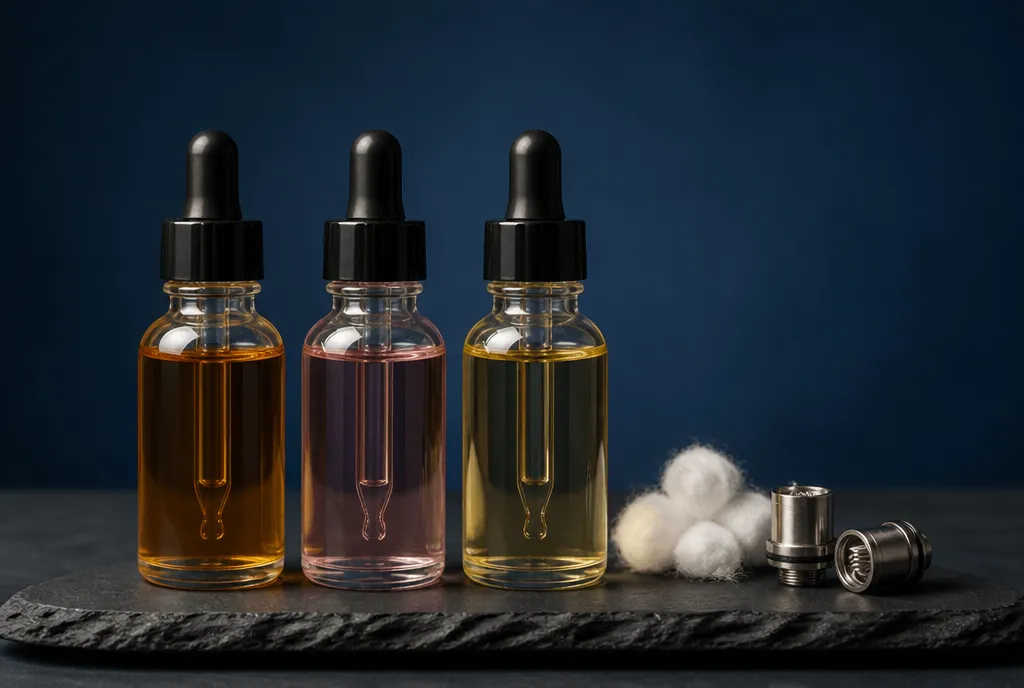
A CBD e-liquid is a vaping liquid that carries cannabidiol, a compound extracted from hemp, and that goes into an ordinary e-cigarette. The base is the same one every vaper already knows: propylene glycol, vegetable glycerine and flavourings. In place of nicotine, the bottle carries a quantity of CBD, stated in milligrams.
That single substitution changes more than it looks. Nicotine strength in the United Kingdom is capped by regulation and sits in a narrow band, whereas CBD content varies from a hundred milligrams to several thousand in the same shelf space. Two bottles that look identical can therefore be an order of magnitude apart.
Nothing in the format is exotic. It fills a tank, wets a coil and produces vapour like any other liquid. What differs is the reading grid: extract type, total content, bottle volume, and the power your hardware applies to it.
Where the UK rules on a CBD e-liquid really sit
This is where imported explanations do the most damage, because the British regime is built on different foundations from the French one. Pure CBD, as an isolated substance, is not controlled under the Misuse of Drugs Act 1971, and the Home Office says so in its drug licensing factsheet on cannabis, CBD and other cannabinoids.
The rest of the plant is another matter. Cannabinol and its derivatives, including THC and THC-V, are Class B controlled drugs, and a preparation containing a controlled drug is itself controlled. A consumer CBD product is therefore lawful only if it meets the exempt product definition set out in regulation 2 of the Misuse of Drugs Regulations 2001.
That definition has three limbs, and all three must be met. The product must not be designed for administration of the controlled drug, the controlled drug must not be recoverable by readily applicable means, and no one component part may contain more than one milligram of the controlled drug. The Home Office states that the unit of measure for that milligram is the container, such as a bottle, and not a supposed typical dose.
Two figures often quoted online do not belong here. The 0.2 per cent THC threshold identifies approved seed varieties for licensed industrial hemp cultivation under the fees regulations, not a permitted level in a finished bottle. And the Food Standards Agency novel food regime covers CBD as a food, so it applies to what is swallowed, not to a liquid that is vaped.
What changes compared with a nicotine e-liquid
Habits built on nicotine bottles transfer badly, and four differences explain most beginner frustration. They are worth knowing before the first tank rather than after it.
- Most ready to vape cannabidiol bottles carry no nicotine at all: the two molecules rarely share a bottle.
- The throat sensation is its own thing, sometimes more assertive than expected on the first draw.
- The molecule is vaped at low power, and a high wattage setting turns the result harsh.
- Depending on the extract, a vegetal hemp note sits underneath the flavouring, faint or obvious.
There is also a packaging consequence. The tank and bottle limits that British vapers know, two millilitres of tank capacity and ten millilitres per refill container, come from the Tobacco and Related Products Regulations 2016 and attach to nicotine containing products, which is why unflavoured cannabidiol bottles are commonly sold in larger formats.
The two families on the British shelf
The offer splits along two axes, and knowing which one you are looking at removes most of the confusion in a product listing. The first axis is the extract, the second is the format.
On extracts, full spectrum keeps the wider set of plant compounds, broad spectrum removes the controlled ones, and isolate keeps purified cannabidiol alone. That choice drives the taste more than anything else on the label, and our comparison of full spectrum, broad spectrum and isolate works through the differences.
On formats, a ready to vape bottle is used as it comes, while a booster shot is a heavily loaded concentrate designed to be diluted into a neutral base. The second route belongs to vapers who want to set their own final content rather than accept a fixed one.
How to read a label before you buy
Three lines on a bottle carry almost all the useful information, and the rest is marketing. Reading them in order takes a few seconds and avoids the classic mismatch between product and hardware.
Start with the total content and the volume together. A bottle stating one thousand milligrams in fifty millilitres and one stating two hundred milligrams in ten millilitres are not comparable until both are brought back to milligrams per millilitre. Our guide to choosing a CBD strength sets out the usual bands.
Then check the extract name, since that is what decides whether flavourings come through cleanly or sit on a hemp background. Finally, look at the stated ratio of propylene glycol to vegetable glycerine, because it has to match the coil you intend to use, a subject covered in our guide to hardware and settings.
A responsible seller will also hold laboratory analysis of the finished product. The Home Office expects compliance with the one milligram limb to be demonstrated by testing at a laboratory accredited to ISO/IEC 17025, and it does not itself assess or certify that a given product is exempt.
Frequently asked questions
Does a cannabidiol vaping liquid contain nicotine?
In the large majority of cases, no. Ready to vape cannabidiol bottles are formulated without it. A small number of references combine both, and they say so plainly on the label, so the packaging settles the question.
Will it taste of hemp?
That depends entirely on the extract. An isolate based liquid is close to neutral and lets the flavouring lead, while a full spectrum keeps earthy vegetal notes underneath. Fruit, menthol and tobacco flavourings then sit on top of that background.
Can it be mixed with a nicotine bottle?
Two compatible liquids can physically be mixed, but the result rarely satisfies. The two products are vaped at different power settings, and the blend usually ends up wrong for both. Vaping them separately is the simpler route.
How long does an opened bottle keep?
Kept closed, away from light and heat, several months is normal. Cannabidiol and flavourings both age slowly. A colour that darkens noticeably or a changed smell are the practical signs that a bottle has passed its best.
Are these products age restricted in the UK?
Yes. Vaping products are not for sale to under 18s in the United Kingdom, and since 1 June 2025 it has been unlawful for businesses to sell or supply single use vapes, whether or not they contain nicotine.
Starting out without guessing
The useful reflex with cannabidiol is to slow down the first purchase rather than the first tank. Read the strength as milligrams per millilitre, identify the extract, check the base ratio against your coil, and keep the power low.
Approached that way, a CBD e-liquid stops being an opaque product and becomes one more flavour territory to explore, with its own reading grid. The regulatory picture is genuinely different from the one described on French sites, so it is worth relying on the British sources rather than on translated summaries. Everything else, meaning which profile you actually enjoy, is settled bottle by bottle rather than by any table.
Editorial content for adult readers only. Vaping products usually contain nicotine, a substance that causes addiction. Not for sale to under-18s in the United Kingdom. This article is not a buying recommendation.